Have you ever jumped out of an unexpected cold shower? This could mean trouble with your water heater’s heating element. Learning to spot signs of a failing heating element can avoid cold surprises. It ensures your showers are always warm. We’ll share tips from Works Plumbing for early troubleshooting.
Figuring out problems with electric water heaters might seem tough at first. But noticing changes in water temperature or getting only cold water is a big hint. By reading this, you’ll get the know-how to spot and fix heating element issues. This keeps your water heater working right.
Key Takeaways
- Understanding cold water output can indicate a heating element issue.
- Expert advice from Works Plumbing highlights the importance of proper diagnosis.
- Knowledge of initial troubleshooting steps can prevent larger issues.
- Consistent hot water supply depends on identifying heating element failures.
- Diagnosing heating element failure ensures efficient water heater function.
- Effective electric water heater troubleshooting saves time and money.
Understanding Electric Water Heaters
Electric water heaters are popular in homes because they are easy to use and efficient. Knowing about their parts and operation helps fix and troubleshoot them.
Components of Electric Water Heaters
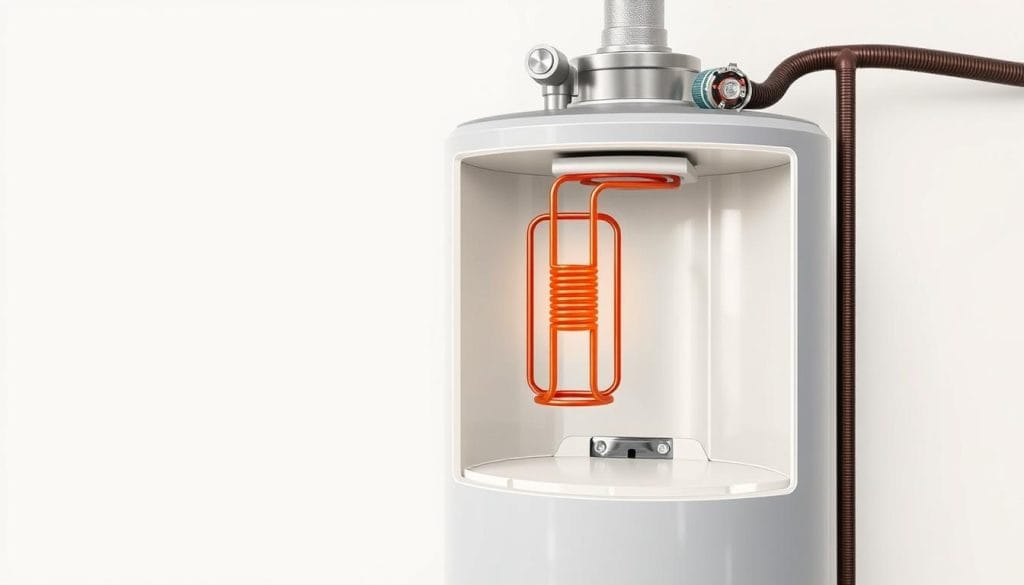
The main parts of electric water heaters are the thermostat, heating elements, dip tube, and tank. The thermostat sets the water’s temperature. The dip tube moves incoming cold water to the bottom of the tank for heating. Heating elements, which are crucial, turn electric power into heat.
How Heating Elements Work
Heating elements warm the water by using electricity through resistant materials. This changes electric energy into heat, heating up the water in the tank. Materials like nickel and chrome alloys are used because they are efficient and last long.
Common Types of Heating Elements
Electric water heaters use different kinds of heating elements. Most are made from metals like nickel or chrome alloys. Ceramic elements use PTC ceramics for better safety. Composite elements mix materials to offer good efficiency and durability.
Learning about these parts and how they work is key to fixing and finding issues with electric water heaters. This knowledge ensures your heater works well and efficiently.
Signs of Heating Element Failure
Knowing when your electric water heater’s heating element fails is key for quick fixes. Electrical problems and old parts can cause different signs that there’s an issue. Spotting these signs early helps in efficient electric water heater troubleshooting.
Inconsistent Water Temperature
Seeing the water temperature change a lot? This could be a warning sign. A bad lower or upper heating element might be to blame, making the heating uneven. Catching this early keeps you from cold showers.
No Hot Water at All
When there’s no hot water, the heating element might have failed. Overloads can trip the circuit breaker, stopping the heating process. To fix it, check the thermostat and heating elements for problems as part of electric water heater troubleshooting.
Unusual Noises from the Heater
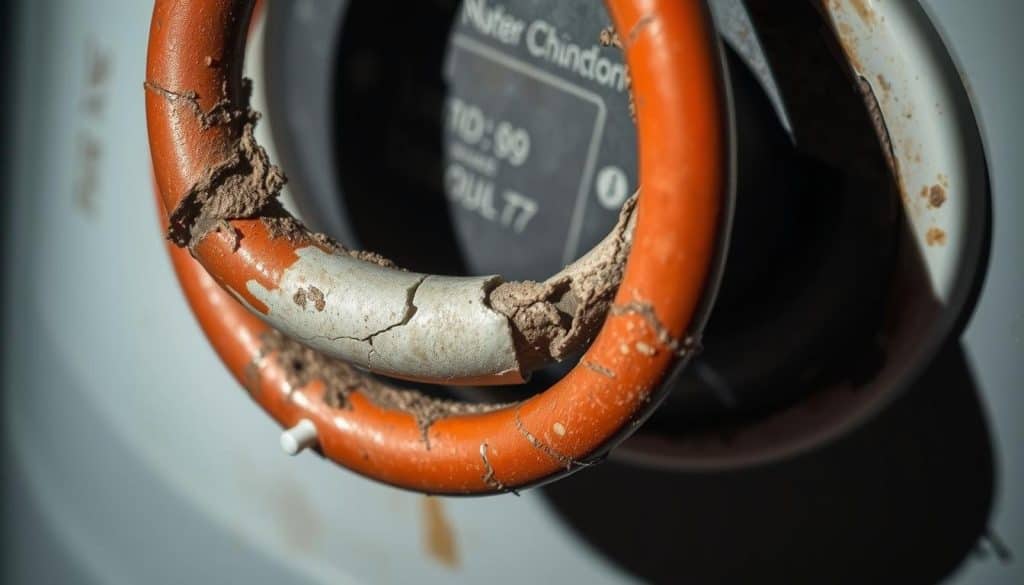
Odd noises like popping from your heater often point to a heating element issue. These sounds usually come from mineral buildup that makes elements overheat and noise. Catching these noises early can stop bigger issues with identifying heating element issues.
Testing for Heating Element Issues
Figuring out water heater issues can often be as straightforward as checking the heating elements. This part will walk you through electric water heater repair. It will show how to test the elements with the correct tools and steps.
Tools You’ll Need
Before you start troubleshooting, make sure you have some key tools. You’ll need a multimeter, a screwdriver, and safety gloves. These tools make it safe and easy to repair electric water heaters.
Step-by-Step Testing Procedure
First, make sure the water heater’s power is off at the circuit breaker. Then, take off the access panels to see the heating elements. Use the multimeter set to the lowest resistance. Touch its probes to the element’s terminals.
Interpreting Your Results
If the multimeter’s reading matches the suggested resistance, your heating element is probably okay. But, if the reading shows no continuity or resistance, the element is broken and needs a replacement. Understanding these readings correctly is key for fixing electric water heater problems.
By doing these steps, you can properly figure out and fix water heater issues. This ensures a smooth and safe repair process for electric water heaters.
Common Causes of Heating Element Failure
Fixing electric water heaters starts with knowing why heating elements fail. Things like mineral buildup and electrical issues are big problems. They make heaters less efficient and raise repair costs.
Mineral Buildup and Scale
Hard water is full of calcium and magnesium. This causes mineral buildup in the heater. Over time, these minerals make a thick layer, making the heater less efficient. It can cause the elements to overheat and break.

Electrical Issues or Short Circuits
Electrical malfunctions are common in electric water heaters. Problems like loose connections or short circuits can overheat the heater. When the currents aren’t right, it puts too much stress on the elements. They wear out faster than they should. Checking these things often can prevent bigger problems later.
Age and Wear of Components
Even good electric heaters get old. Parts like the heating elements wear out over time. Heating and cooling over and over weakens the elements. Fixing wear issues is part of routine maintenance. It helps make your water heater last longer and prevents sudden breakdowns.
Knowing these issues and taking steps early can help you keep your electric water heater running longer. It also helps avoid unexpected problems.
Repair or Replace? Making the Decision
When your electric water heater starts having issues, deciding whether to fix it or buy a new one is crucial. You should think about the repair costs, how old your heater is, and if you need a professional to look at it.
Cost Analysis of Repairs vs. Replacement
Figuring out the costs to fix your water heater is key. If fixing it costs about half as much as a new one, then getting a new one might save money. Think about labor, parts, and any future repairs too.
Considering Unit Age and Efficiency
The age and efficiency of your water heater matter a lot. They usually last between 10 to 15 years. If yours is old, a new, efficient model might be better. Often, needing a lot of repairs shows it’s time for a new one.
Professional Help vs. DIY Solutions
DIY repairs might save money but hiring pros like Sanders Plumbing HVAC is safer and ensures quality. Professionals can handle complicated problems and offer warranties on their work. This is important for electric water heater repair because it needs special skills.
Preventive Maintenance for Electric Water Heaters
To make your electric water heater last longer, it’s key to take care of it regularly. Paying attention to your water heater helps avoid issues with the heating element. It also helps your heater work longer. By doing some preventive steps regularly, you can keep big problems from happening.
Regular Flushing of the Tank
Flushing the tank often is a top way to take care of electric water heaters. Sediment and minerals can gather at the bottom over time. This mess can make your heater work poorly and even break it. Flushing the tank every six months gets rid of these deposits. This helps your heater work better and prevents problems.
Inspecting Electrical Connections
Checking the electrical parts is also very important. If connections get loose or rusty, your heater might not work right. It’s good to check all the electrical parts often to make sure they’re tight and not damaged. This keeps your heater safe and working well, making it last longer.
Tips for Extending the Life of Your Heater
To help your heater last even longer, set the temperature to 120 degrees Fahrenheit. This prevents it from getting too hot. Wrapping exposed pipes and the heater itself keeps the heat in. This makes your heater work less hard. Also, have a professional check your heater every year. They can spot and fix problems early, saving you money on big repairs later.